

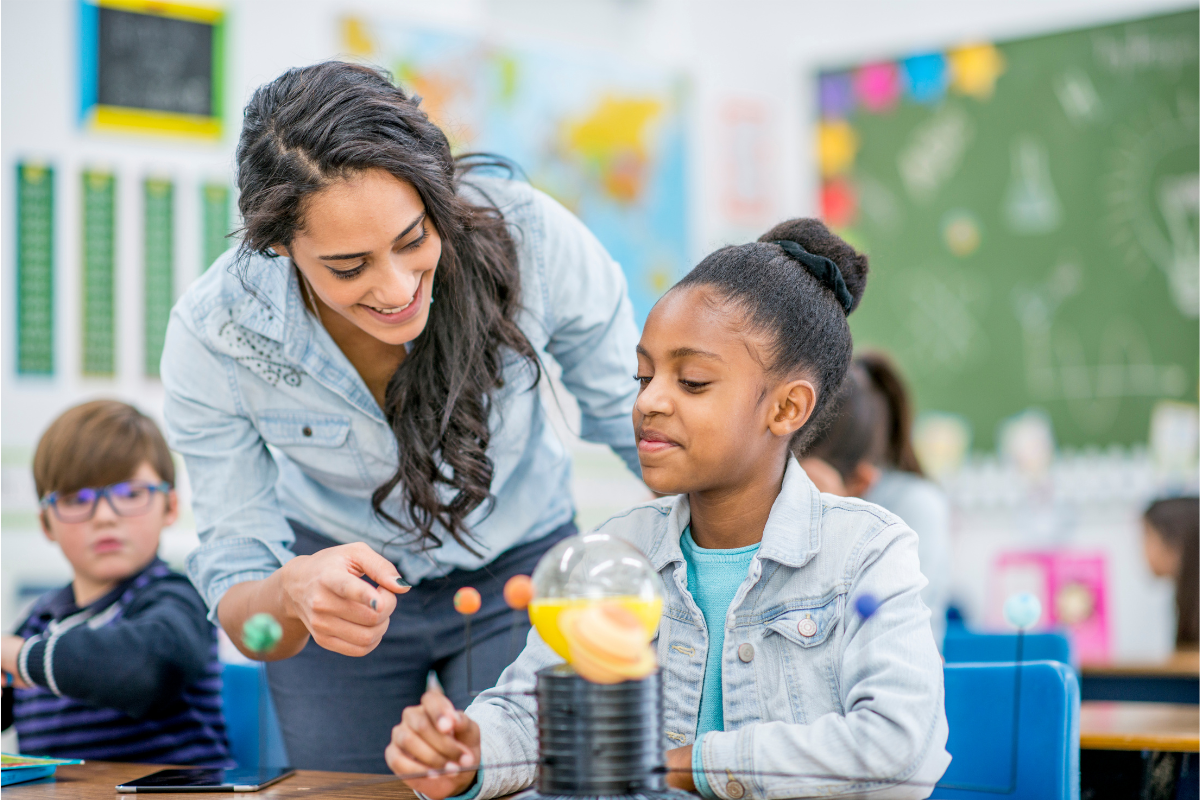
Experiential learning is transforming how schools approach education by moving beyond passive instruction toward active participation and real-world engagement. Instead of only listening to lectures or memorizing facts, students learn by doing—through projects, experiments, simulations, and collaborative activities.
This approach helps learners connect theory with practice, making education more meaningful, engaging, and effective for long-term development 🎓
Encourages Deeper Understanding of Concepts
Experiential learning helps students grasp ideas more clearly because they actively apply what they learn instead of simply memorizing information.
Hands-on learning improves understanding by:
- Connecting lessons with real-life situations
- Reinforcing theoretical knowledge through practice
- Encouraging curiosity-driven exploration
- Making abstract concepts easier to visualize
Students often remember experiences longer than textbook explanations, which strengthens knowledge retention.
Improves Critical Thinking Skills
When students participate in activities such as experiments, group discussions, or problem-solving tasks, they learn how to analyze situations independently.
Experiential learning strengthens critical thinking by encouraging students to:
- Evaluate different solutions
- Ask meaningful questions
- Interpret results from activities
- Reflect on outcomes and decisions
These abilities support academic success and prepare students for real-world challenges.
Builds Confidence and Independence
Experiential learning environments give students opportunities to take initiative and make decisions during activities. This helps them develop confidence in their abilities.
Confidence grows as students:
- Complete tasks independently
- Share ideas openly
- Participate actively in discussions
- Solve challenges through teamwork
Over time, students become more comfortable expressing their opinions and taking responsibility for learning.
Enhances Collaboration and Communication Skills
Many experiential learning activities involve teamwork, which encourages students to interact constructively with peers.
Collaboration improves when students:
- Work together on group projects
- Exchange ideas respectfully
- Share responsibilities during activities
- Practice listening and presentation skills
Strong communication skills developed early in school benefit students throughout their academic and professional journeys.
Promotes Real-World Application of Knowledge
Experiential learning helps students understand how classroom knowledge connects to everyday life. This makes lessons more relevant and practical.
Examples of real-world learning experiences include:
- Science experiments
- Educational field visits
- Role-playing activities
- Community-based projects
- Model-building exercises
These experiences help students recognize the usefulness of what they learn in school.
Increases Student Engagement and Motivation
Students are more likely to stay focused and interested when they participate actively in learning tasks rather than listening passively.
Engagement increases because experiential learning:
- Makes lessons interactive
- Encourages participation
- Reduces classroom monotony
- Supports creative thinking
Motivated students are more likely to perform better academically and enjoy learning.
Supports Development of Problem-Solving Skills
Experiential activities often present real or simulated challenges that students must solve using logic and teamwork.
Problem-solving abilities improve as students learn to:
- Identify challenges clearly
- Test different strategies
- Learn from mistakes
- Adjust approaches based on outcomes
These skills prepare students for future academic tasks and career responsibilities.
Encourages Emotional and Social Growth
Experiential learning supports personal development alongside academic improvement. Students learn empathy, responsibility, and cooperation through shared experiences.
Social development benefits include:
- Better peer relationships
- Improved emotional awareness
- Stronger teamwork habits
- Greater respect for diverse viewpoints
These qualities help create a supportive and inclusive learning environment.
Helps Teachers Identify Individual Learning Styles
Experiential learning activities allow teachers to observe how students respond to different methods of instruction.
This helps educators:
- Recognize strengths and weaknesses
- Adapt teaching strategies
- Provide targeted support
- Encourage balanced participation
Personalized support leads to more effective learning outcomes for all students.
Strengthens Long-Term Knowledge Retention
Students tend to remember lessons longer when they participate directly in activities related to what they are learning.
Retention improves because experiential learning:
- Engages multiple senses
- Encourages reflection after activities
- Connects theory with action
- Reinforces understanding through repetition
Long-term retention supports stronger academic performance across subjects 📚
Frequently Asked Questions (FAQs)
1. What is the main difference between experiential learning and traditional classroom learning?
Experiential learning focuses on learning through activities and real-world experiences, while traditional learning often relies more on lectures and textbook-based instruction.
2. At what age can experiential learning be introduced in schools?
Experiential learning can begin at early primary levels and continue through secondary education with activities adapted to age and ability.
3. Can experiential learning improve academic results?
Yes, active participation helps students understand concepts better, which often leads to improved academic performance.
4. Does experiential learning require special equipment or facilities?
Not always. Many experiential activities can be conducted using simple classroom materials and creative teaching strategies.
5. How does experiential learning support creativity in students?
Hands-on activities encourage students to explore ideas independently, experiment with solutions, and express their thoughts in new ways.
6. Is experiential learning suitable for all subjects?
Yes, it can be applied across subjects such as science, mathematics, social studies, language learning, and arts through activity-based teaching methods.
7. How can schools gradually introduce experiential learning into their curriculum?
Schools can begin by incorporating project-based assignments, interactive discussions, field visits, and classroom experiments alongside existing teaching approaches.
Comments are closed.